
Challenge
Produce lightweight, strong and resistant high-performance parts for next-generation aircraft and humanoid robot structures.
Application Case Study
High-performance PEEK and continuous carbon fiber composite 3D printing delivers lightweight and high-strength parts with high-temperature resistance, corrosion resistance and fatigue resistance for next-generation aircraft and humanoid robot structures.
Material
PEEK + continuous carbon fiber composite
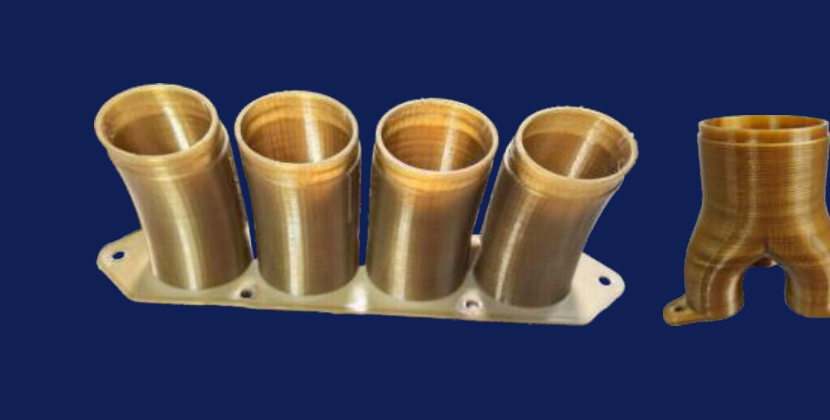
Produce lightweight, strong and resistant high-performance parts for next-generation aircraft and humanoid robot structures.
Use high-crystallinity PEEK and continuous carbon fiber composite printing for high-temperature and fatigue-resistant parts.
High-performance PEEK and continuous carbon fiber composite 3D printing delivers lightweight and high-strength parts with high-temperature resistance, corrosion resistance and fatigue resistance for next-generation aircraft and humanoid robot structures.
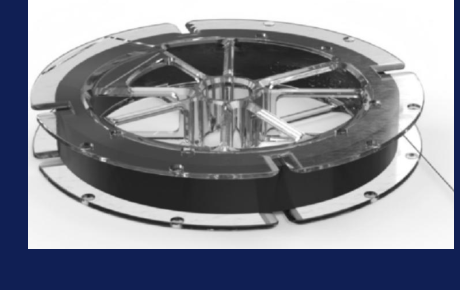
Self-developed continuous fiber prepreg technology provides high-quality PEEK/CCF continuous fiber 3D printing filament, improving printing performance, reducing structural defects and enabling high-performance lightweight parts.
View Details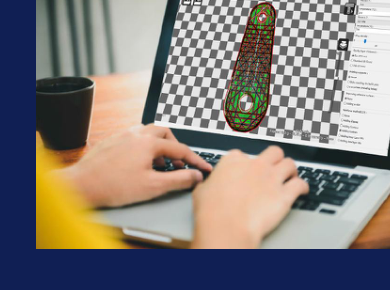
Proprietary 3D printing slicing software that combines material characteristics, simulation and path optimization. It supports customized parameters for precise and application-specific printing.
View Details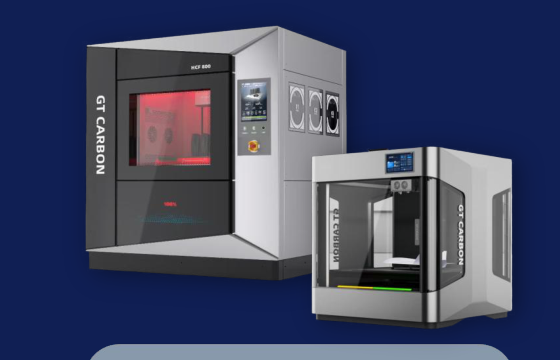
A product portfolio from desktop systems to large-format high-temperature industrial printers, with PEEK printing capability and robotic-arm ultra-large 3D curved-surface continuous fiber printing solutions.
View Details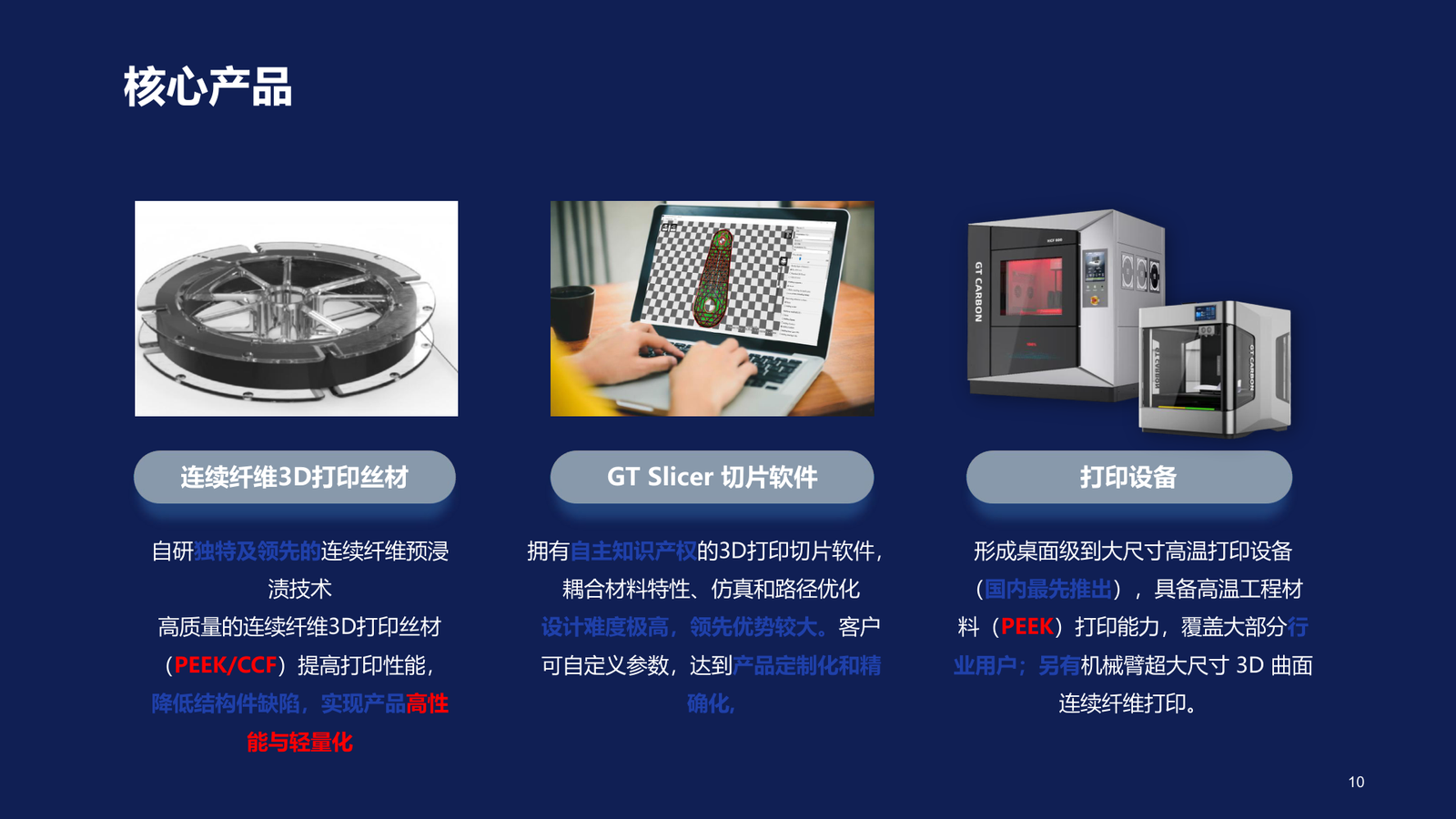
Engineering service for high-value applications, covering rapid prototyping, small-batch production, lightweight design, process development and integrated structure-function manufacturing.
View Details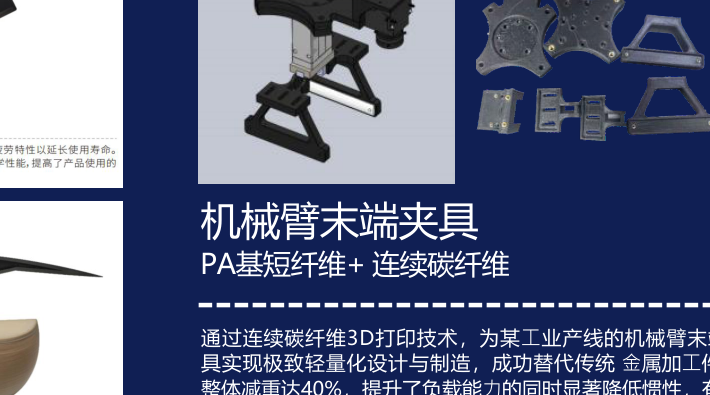
Using continuous carbon fiber 3D printing, the traditional metal part was replaced, achieving about 40% weight reduction, improving payload capacity and reducing inertia to support faster robot movement, longer service life and lower energy consumption.
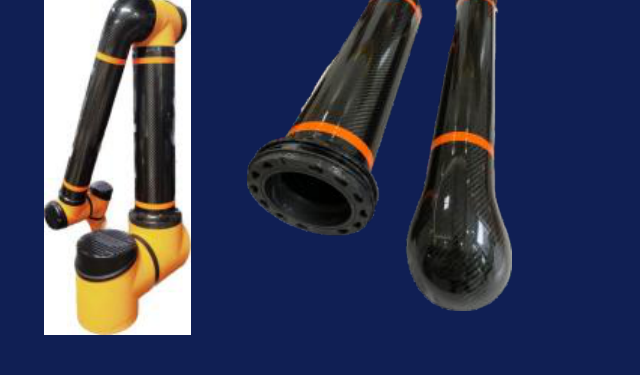
iFiber technology was used to design and manufacture the arm tube. Directional continuous carbon fiber printing forms the main load-bearing structure, reducing weight by about 35% and outperforming the original metal structure.