
Shanghai Yijun Medical Technology — YIJUN H-FABP Rapid Test Kit
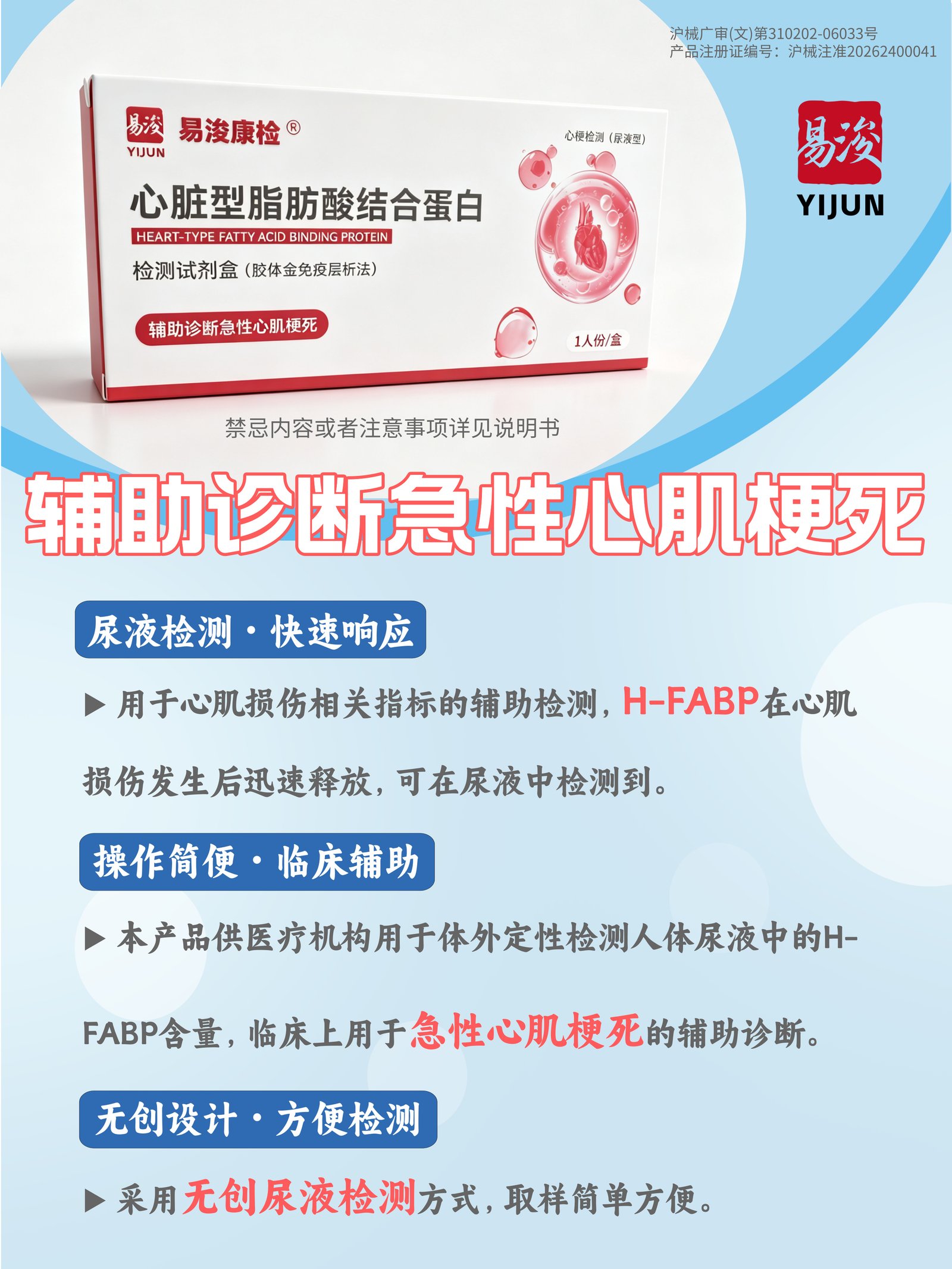
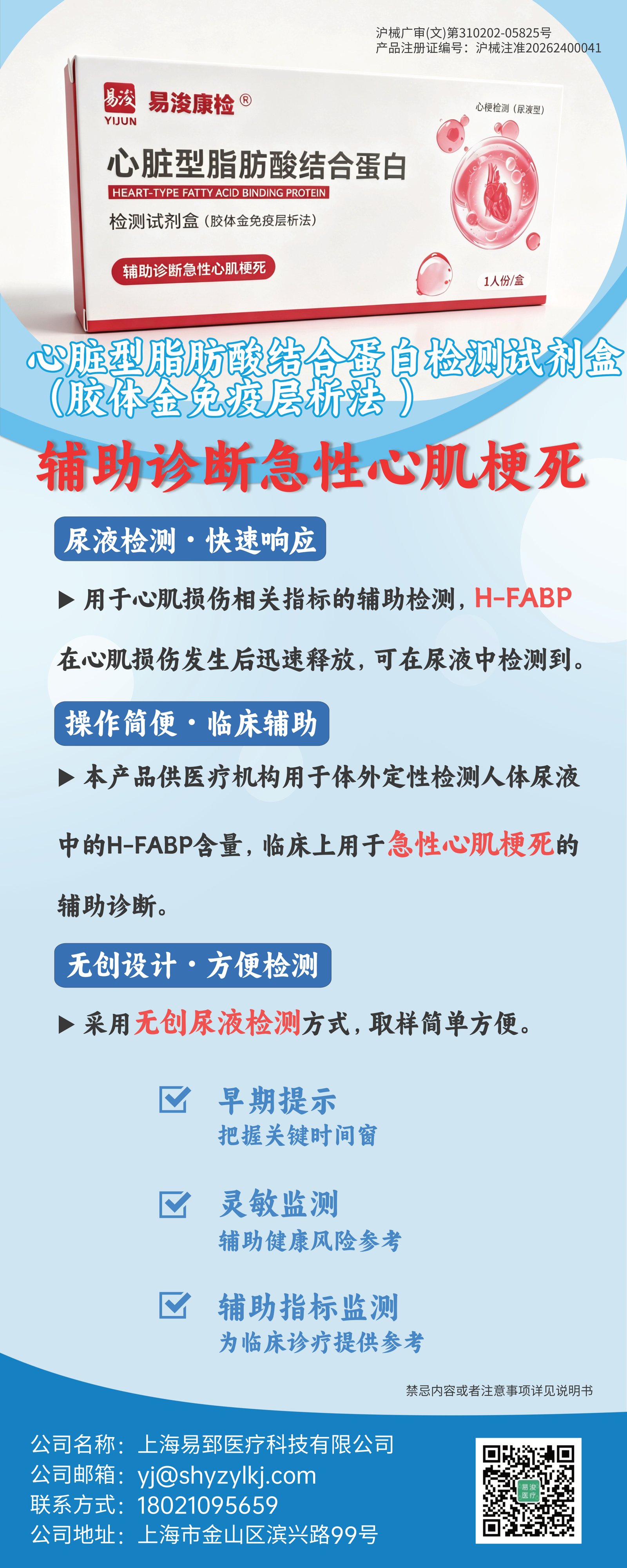
A urine-based H-FABP rapid test kit designed for in-vitro qualitative detection of heart-type fatty acid-binding protein in human urine, supporting auxiliary diagnosis of acute myocardial infarction in medical institutions.
IVD product showcase + acute myocardial infarction auxiliary testing page + medical channel cooperation inquiry page.
Product Overview
YIJUN H-FABP Rapid Test Kit is an in-vitro diagnostic reagent kit for detecting heart-type fatty acid-binding protein in human urine.
According to the promotional materials, H-FABP is rapidly released after myocardial injury and can be detected in urine. The product is positioned as a non-invasive, convenient and rapid auxiliary testing tool for medical institutions.
Key Product Advantages
H-FABP Marker Explanation
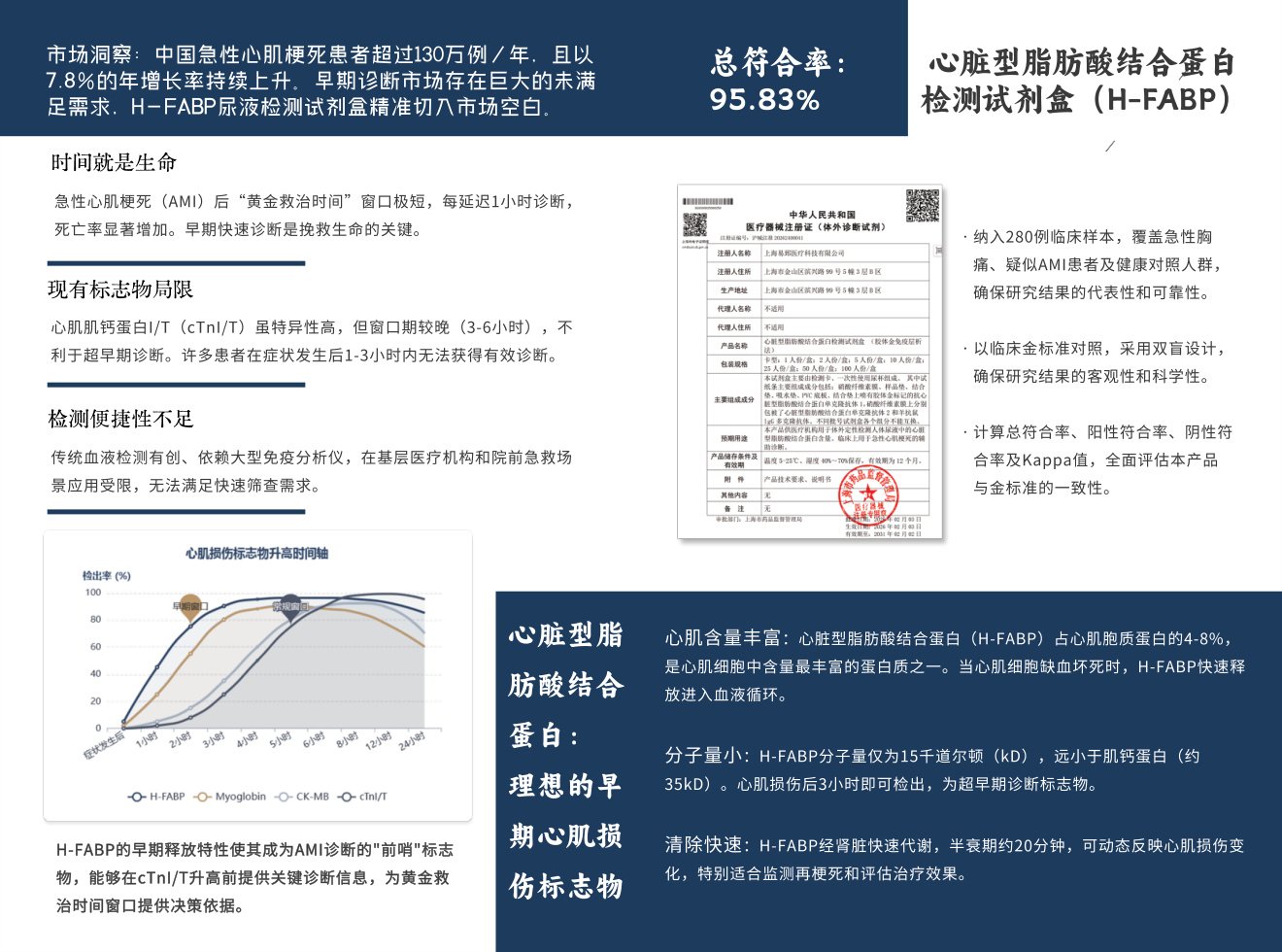
H-FABP stands for heart-type fatty acid-binding protein. It is described in the brochure as a protein rich in myocardial tissue and as a potential early marker for myocardial injury.
The brochure explains that H-FABP has small molecular size and can be detected within approximately 3 hours after myocardial injury, making it a reference marker for early myocardial injury evaluation.
Market & Clinical Need
The brochure states that acute myocardial infarction deaths in China exceed 1.3 million cases per year, with an annual growth rate of 7.8%. It also highlights that early diagnosis still has unmet clinical needs.
The material emphasizes that time is life for AMI, and early rapid detection can help support clinical decision-making.
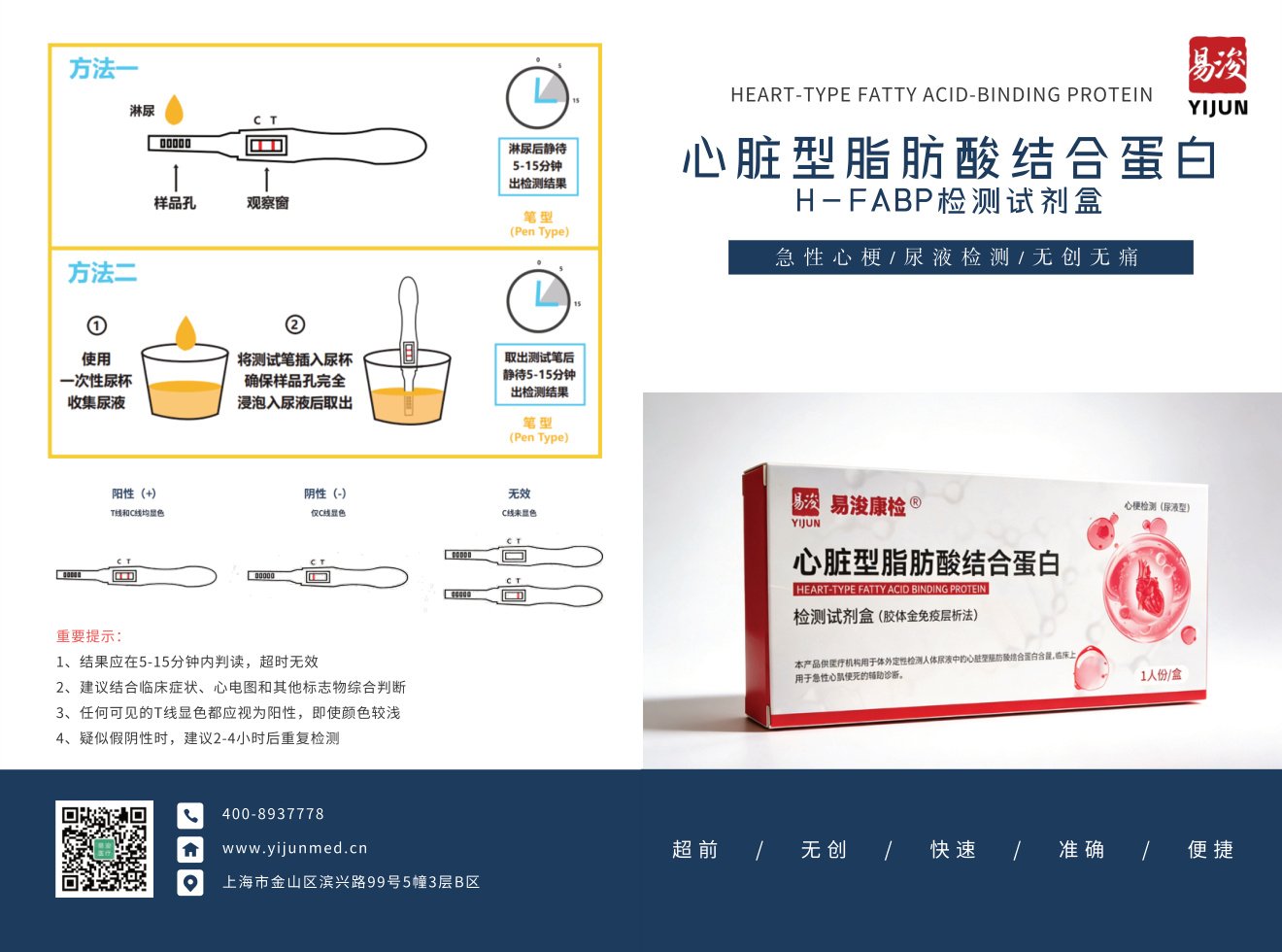
Testing Method
Registration & Compliance Information
The promotional materials display Chinese medical device registration information and product registration certificate content.
The page presents the product as an IVD test kit for medical institutions and avoids exaggerated claims. Market access, registration, import approval and clinical application requirements may vary by country or region.
Product & Technology Pages
IVD Rapid Test
YIJUN H-FABP Rapid Test Kit
Urine-based H-FABP rapid test kit for in-vitro qualitative detection of heart-type fatty acid-binding protein, supporting auxiliary diagnosis of acute myocardial infarction in medical institutions.
Urine H-FABP Test
Urine H-FABP Myocardial Injury Test
Urine-based test method for qualitative detection of heart-type fatty acid-binding protein, supporting auxiliary evaluation of myocardial injury-related indicators.
Auxiliary Diagnosis
Acute Myocardial Infarction Auxiliary Diagnosis Kit
IVD reagent product positioned for auxiliary diagnosis of acute myocardial infarction by detecting H-FABP in human urine.
Application Scenarios
Cooperation Models
Compliance Notice
The information on this page is for business introduction, product distribution discussion and market cooperation only. This product is an in-vitro diagnostic product for medical institution use. It should not be used as the sole basis for diagnosis or treatment decisions. Clinical interpretation should be combined with symptoms, ECG and other laboratory indicators. Product registration, import approval, advertising claims and clinical application requirements may vary by country or region. Partners should verify local regulations before distribution or promotion.