

Sourcing Agent vs. AI: Why Human Expertise is the Ultimate Safeguard in Digital Procurement Transformation

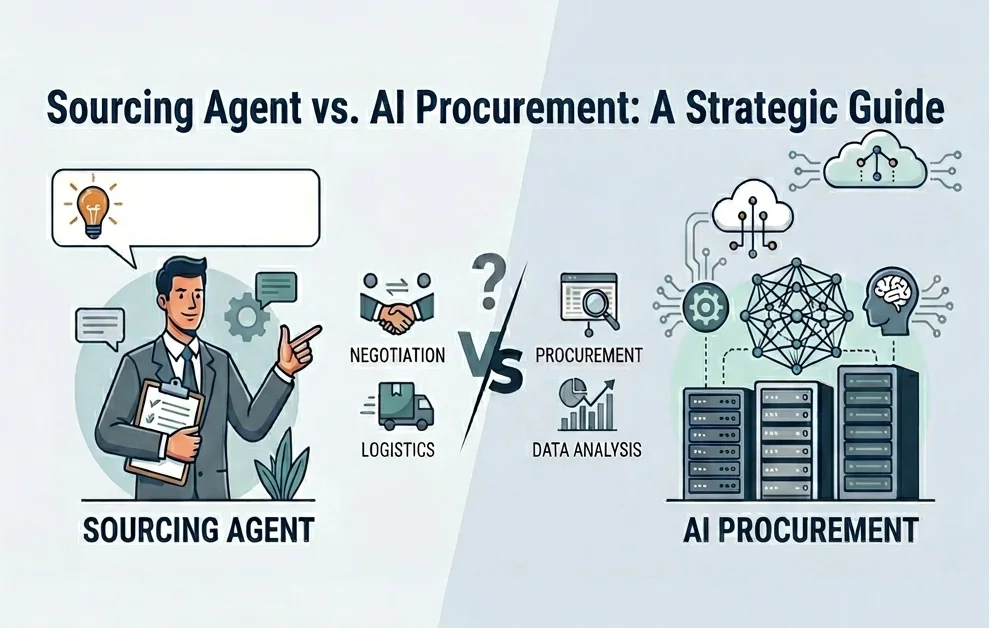
The global trade ecosystem of 2026 has transitioned from a period of experimental digitalization to one of total immersion in Generative AI.
In this landscape, the role of the traditional sourcing agent and the capabilities of advanced AI have collided, creating a dynamic where digital procurement transformation is no longer a luxury but a baseline requirement for survival. For businesses navigating the complexities of international trade, the central question has evolved.
We no longer ask if digital procurement will render the human expert obsolete; instead, we examine how the integration of a purchasing agent alongside AI-driven sourcing solutions creates a superior, hybridized safeguard for the modern supply chain.
The Strengths of AI in Procurement
| Operational Metric | Impact of AI Integration |
| Defect Reduction✅️ | Up to 50% reduction in product defects |
| Manual Task Time⌛️ | Up to 40% time saved on PO and contract review |
| Procurement Costs💰️ | 15% to 20% reduction in operational costs |
| On-Time Delivery📦️ | Up to 20% improvement in delivery performance |
| ROI (First Year)📊 | 25% to 30% Return on Investment |
Rapid Supplier Discovery and Direct Sourcing Solutions
AI excels at processing vast amounts of data, allowing procurement teams to scan catalogs, market trends, and historical purchasing data far faster than any human. Modern AI procurement portal software can interpret supplier listings and instantly recommend matches, creating efficient direct sourcing solutions that accelerate product discovery.
In practice: AI is transforming procurement by automating up to 60% of sourcing tasks. Industry-leading digital procurement platforms like SAP Ariba and Coupa now integrate AI to streamline automated RFQ processes and spend analysis. These tools allow businesses to discover suppliers 5x faster and optimize negotiation outcomes using real-time market data.
AI-Driven Supply Chain Optimization Solutions
Beyond supplier search, AI delivers powerful supply chain solutions through predictive analytics and continuous monitoring. It analyzes demand signals and historical data to forecast inventory needs, potentially cutting inventory costs by 10–15% and improving planning accuracy.
Modern systems provide real-time supply chain visibility solutions, combining internal and external data to track performance and flag risks early—from shipping disruptions to market changes. AI can also monitor supplier stability, alerting teams to potential financial or compliance issues before they escalate.
Specialized AI procurement portal software—such as Kodiak Hub for supplier relationship management or Sievo for CO2 and spend tracking—identifies hidden patterns that support supply chain optimization solutions.